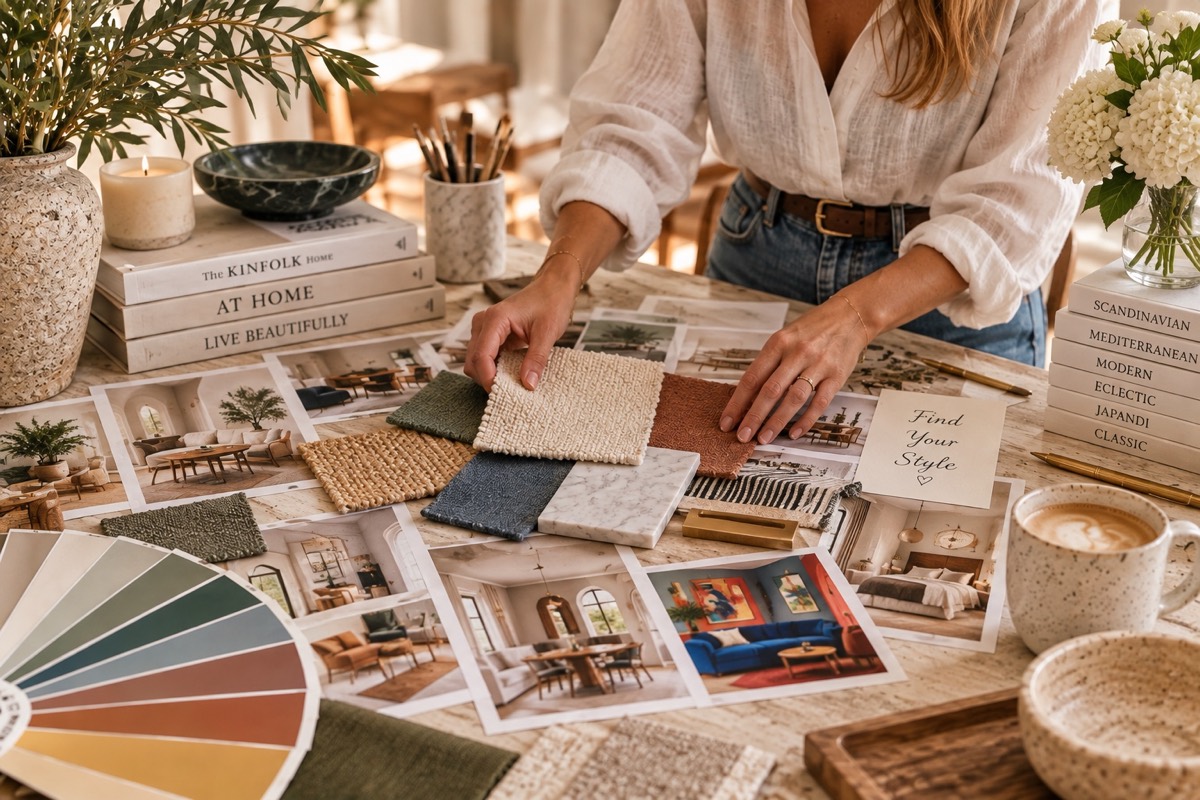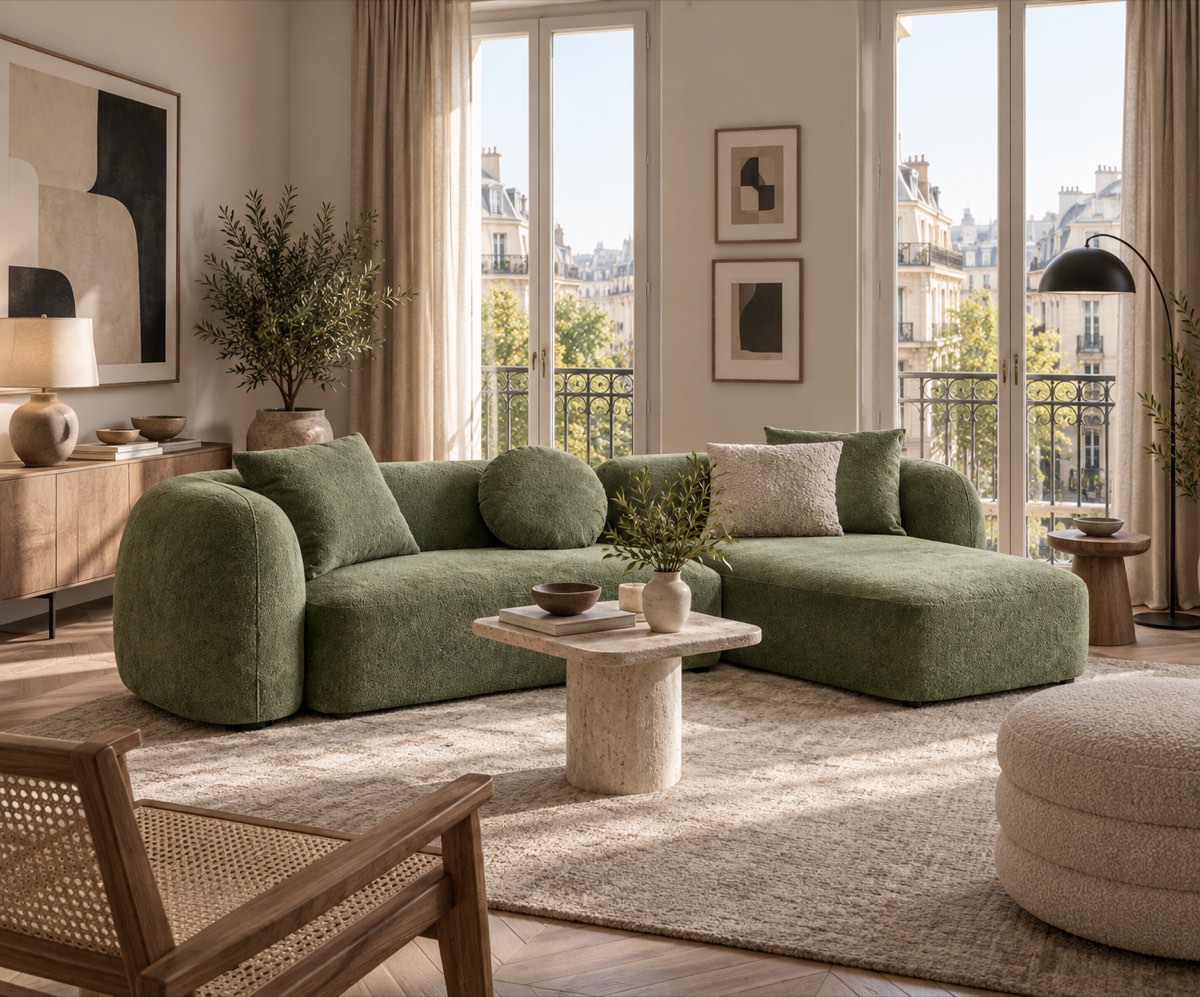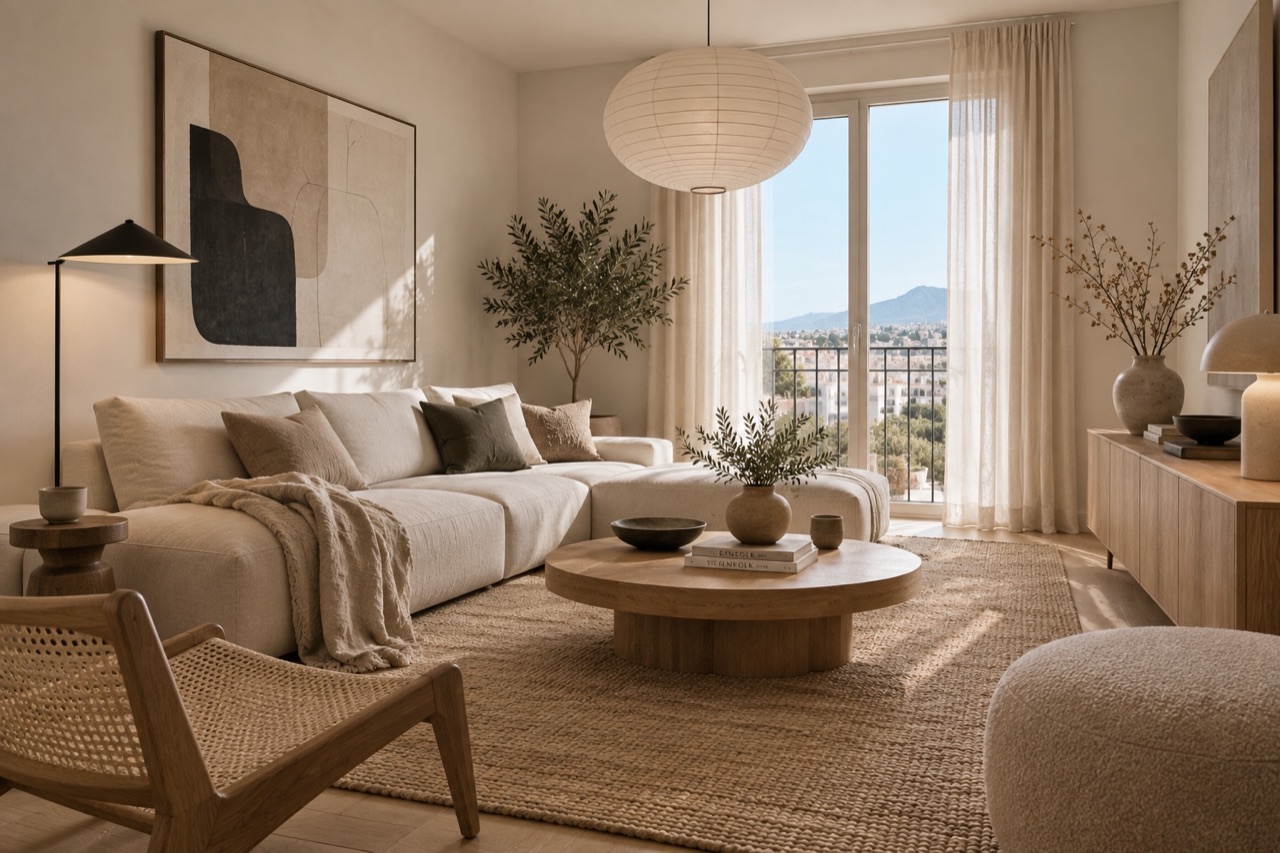
There is a reason Japandi works so well in European homes.
It combines the simplicity and restraint associated with Japanese interiors with the warmth, natural materials and everyday comfort we associate with Scandinavian design. The result is calm and uncluttered, but never meant to feel empty or cold.
And you certainly don't need a huge, perfectly proportioned room to make it work.
In fact, some of the principles behind Japandi can be particularly useful in smaller apartments, where every piece of furniture has more visual impact and there is less space for things that don't quite belong.
The key is not to recreate the beautiful oversized rooms we see online. It is to understand what makes them work and translate those ideas into your own space.
Start With Warmth
A neutral interior can very quickly become cold, particularly in an apartment that doesn't receive a great deal of natural light.
For Japandi, warmer neutrals tend to work better.
Think soft white rather than brilliant white, linen and sand rather than cool beige, with touches of clay, muted green or charcoal to give the room some depth.
Natural wood is an important part of the palette too. Oak, ash and other lighter woods work particularly well because they introduce warmth without making the room feel heavy.
If you already have darker wood, that doesn't mean it needs to go. The room may simply need lighter fabrics, walls and textures around it to create balance.
Rather than trying to match every shade perfectly, concentrate on creating a palette that feels quiet and connected.
Let the Furniture Breathe
One of the easiest mistakes to make in a smaller apartment is choosing too much furniture.
Japandi gives us a good reason not to.
Instead of filling every available wall and corner, think about the pieces the room genuinely needs and give them enough space to breathe.
A well proportioned sofa, a properly sized rug, a lounge table and one good armchair may be all a small living room needs.
The space around those pieces is important too.
Leaving part of a wall empty or allowing a little more room around a chair doesn't mean the room is unfinished. It can actually make the furniture you have chosen feel more intentional.
In a compact room, fewer pieces can often make the space feel larger.
Texture Does Much of the Work
When a room has very little colour or decoration, materials become much more noticeable.
This is where Japandi interiors get much of their character.
Linen, wool, woven fabrics, timber, jute, ceramics and stone all bring subtle variations in texture without making the room visually busy.
A plain sofa can feel incredibly rich in a tactile fabric. A simple wooden table becomes more interesting when you can see the grain. An irregular ceramic vase can bring more personality than a collection of smaller decorative objects.
You don't need all of these materials in one room.
A few, repeated carefully, are usually enough.
Pay Attention to Scale
This matters particularly in European apartments.
The beautiful low sofas and oversized lounge chairs we see in large Japandi interiors can look completely different once placed in a smaller living room with a standard ceiling height.
Before choosing a piece, look at its width, depth and height, not simply its style.
A sofa with a lower back can help a room feel more open, but an excessively deep sofa may take away valuable circulation space. A large lounge table may look beautiful online but leave too little room between the sofa and surrounding furniture.
The aim isn't to choose tiny furniture.
It is to choose furniture that feels generous without overwhelming the room.
Lighting Changes Everything
Japandi interiors are often photographed in beautiful natural daylight, but your room still needs to work at seven o'clock on a winter evening.
Rather than relying on one central ceiling light, create several softer sources of light around the room.
A floor lamp beside the sofa, a small table lamp on a sideboard or a pendant over the dining table creates pools of light at different heights.
This is especially important in a neutral interior because warm lighting brings out the texture of wood, fabric and plaster and stops pale colours from feeling flat.
The light fitting itself can also become one of the room's stronger design elements.
You Don't Need Designer Furniture Everywhere
Japandi is more about choosing carefully than choosing expensively.
An affordable sofa in the right colour and proportions can provide an excellent starting point. IKEA, for example, has simple furniture, natural materials and accessories that can work very well within this style.
Then add character selectively.
A beautiful lamp, a handcrafted ceramic piece, a better rug or one particularly good chair can elevate much simpler furniture around it.
Retailers such as Nordic Nest and RoyalDesign are useful for Scandinavian lighting, textiles and accessories, while Kave Home offers plenty of wooden furniture and simpler contemporary pieces that can sit comfortably within this aesthetic.
The room doesn't need to come from one shop or one price level.
In fact, mixing them often makes it more interesting.
Where It Can Be Worth Spending More
If you do want to invest, spend where you will see and feel the difference.
The sofa and rug occupy a large amount of visual space, so their proportions, texture and quality have an enormous influence on the room.
Lighting is another area where one particularly good piece can change everything around it.
Brands such as Muuto and Fritz Hansen show why simple furniture doesn't necessarily mean basic furniture. When decoration is reduced, proportion, material and craftsmanship become much more visible.
But an investment piece should still earn its place.
A famous chair that is too large for the room isn't automatically a better choice than a simpler chair that fits beautifully.
Don't Copy the Photograph. Copy the Principle.
This may be the most useful way to approach Japandi.
The room you save on Pinterest may have four metre ceilings, enormous windows and twice the floor area of your apartment. Trying to reproduce it piece by piece is unlikely to give you the same result.
Instead, look at why you saved it.
Perhaps it is the warm wood against pale walls. Maybe it is the low furniture, the lack of clutter, the beautiful lighting or simply the feeling of calm.
Take that idea and adapt it to the home you actually have.
You might keep your existing sofa and change the rug. Remove a piece of furniture rather than adding another one. Replace several small decorative objects with one larger ceramic piece. Or simply introduce warmer lighting.
Sometimes creating a calmer room is as much about what you leave out as what you put in.
A Room That Can Evolve Slowly
Perhaps one of the nicest things about Japandi is that a room doesn't need to be finished all at once.
Start with the pieces that matter most. Live with them for a while. Notice where you naturally sit, where you need light and which parts of the room still feel unresolved.
Then add what is genuinely missing.
A home that develops this way usually feels more personal than one bought in a weekend.
And that may be the part of Japandi worth borrowing most. Not simply the pale wood, neutral colours or beautifully shaped furniture, but the idea that fewer, carefully chosen things can create a room that feels warmer, calmer and easier to live in.